Chilli Quality & Buyer Specification Guide
What "900 SHU" or "ASTA colour" actually mean when sourcing dried chilli, what moisture, ash and aflatoxin limits the applicable standards set, and what Tanzania's own smallholder-dominated chilli sector looks like in practice. Grading conventions here are industry-wide, not Tanzania-specific unless stated -- see our Tanzania chilli overview for origin, production and market context.

Terminology, HS codes & product forms
"Chilli" in trade covers several Capsicum species and a range of finished forms. Codex Alimentarius's CXS 353-2022, Standard for Dried or Dehydrated Chilli Pepper and Paprika (effective 20 September 2023) is the current international reference and defines three styles: whole (with or without stalk), crushed/cracked/broken/flakes, and ground/powdered. For whole, unprocessed chillies and capsicums specifically, ISO 972:1997, "Chillies and capsicums, whole or ground (powdered) -- Specification," also exists -- we could confirm its title and scope from ISO's own listing page but could not access the full standard text, so we do not reproduce its numeric limits here. A commonly repeated claim is that "ISO 7540" is the dried-chilli standard; that is incorrect -- ISO 7540:2020 covers ground sweet and hot paprika specifically (Capsicum annuum/frutescens) and explicitly does not apply to ground chillies of other species.
Internationally, dried chilli is traded under HS 0904.21 (dried, neither crushed nor ground) and HS 0904.22 (crushed or ground) -- the same HS 0904 heading covers pepper (Piper) and Capsicum/Pimenta fruits together, so buyers should confirm the full extended code with their customs broker rather than quoting "0904" alone.
Pungency & colour
Pungency (heat) is conventionally reported in Scoville Heat Units (SHU), originally a human taste-panel method, now standardly measured by HPLC quantification of capsaicinoids and converted to an SHU-equivalent figure. The trade also uses ASTA pungency units, a separate American Spice Trade Association lab convention; one commercial source states a 1 ASTA pungency unit ≈ 15 SHU conversion, which we flag as sourced from a trade/commercial page rather than ASTA's own published methodology, and have not independently confirmed. ASTA colour units are a distinct scale (roughly 40-180+) used mainly to grade the red-colour strength of paprika and paprika oleoresin, not chilli pungency -- the two ASTA scales measure different things and should not be conflated.
The clearest concrete pungency/colour table we found comes from a Zanzibar-specific source: the Zanzibar Bureau of Standards' draft standard PCD 699:2025 (explicitly based on CXS 353-2022) classifies by Scoville band:
| Product | Pungency (SHU) | ASTA colour units (min) |
|---|---|---|
| Paprika (sweet) | ≤480 | Extra 120 · Grade I 100 · Grade II 60-80 |
| Hot paprika | >480 and <900 | Extra 120 · Grade I 100 · Grade II 60-80 |
| Chilli peppers | ≥900 | Not specified (N/A) |
Source: Zanzibar Bureau of Standards, draft PCD 699:2025, "Dried or dehydrated chilli pepper and paprika -- Specification", Table 1. This is a first-edition draft open for public comment, not yet a compulsory Zanzibar National Standard as of this research pass -- treat its figures as the clearest currently-available Tanzania/Zanzibar-adjacent reference, not as settled law.
Moisture, ash & fibre
The same ZBS draft (Table 1) sets, for whole chilli peppers: moisture 11% w/w max, total ash 10% w/w max (dry basis), acid-insoluble ash 1.6% w/w max (dry basis); for ground chilli, crude fibre is capped at 30% and non-volatile ether extract set at a 12% minimum (both dry basis). A footnote allows ground product containing anticaking agents (max 2%) a higher moisture allowance. These figures are drawn directly from Codex CXS 353-2022, which the draft cites as its normative basis -- we treat the two as consistent rather than independent corroboration.
Defect tolerances
The ZBS draft's clause 4.6 sets these defect ceilings (test method: Annex A / ISO 927):
| Defect | Limit (% m/m, max) |
|---|---|
| Unripe fruits | 2% |
| Marked (black/black-stained) fruits | 2% |
| Broken fruits & fragments | Extra 5% · Grade I 10% · Grade II 10% |
| Off-size | 5% |
| Other varieties mixed in | 5% |
Separately, a physical-requirements table in the same draft sets: mammalian/other excreta ≤1 mg/kg, mould damage combined with insect damage ≤3% (whole), extraneous matter (plant matter not part of the product) ≤1%, foreign matter (sticks, stones, metal etc.) ≤0.5%, and zero tolerance for live insects.
An honest flag on the source itself: the draft's clause 4.3 states the Extra/Grade I/Grade II classification applies to paprika and hot paprika; its clause 4.6 defect table then applies that same three-tier system to "broken fruits and fragments" without restating which product it covers, while the chemical-requirements table (Table 1) leaves "Chilli peppers" with no Class/Grade subdivision at all ("-"). We report the defect figures as given rather than resolve this ambiguity for the drafters -- it is a rough edge in a document still open for public comment, not a transcription error on our part. A separate, older reference, the UNECE trial recommendation for whole dried chilli peppers (2012), uses a different framing entirely -- blemish/discolouration affecting not more than 25% of surface area, plus zero tolerance for living pests, mould and abnormal external moisture -- consistent in spirit but not numerically identical to the ZBS/Codex table above. Sources: ZBS draft PCD 699:2025; UNECE recommendation (2012).
Aflatoxin & mycotoxin limits -- a genuine food-safety issue
Dried chilli grown and dried in humid tropical conditions carries real aflatoxin risk from mould growth during drying and storage, and this is treated as a substantive food-safety parameter, not a formality, by every regulatory source we checked:
| Source / regime | Aflatoxin B1 | Total aflatoxins | Ochratoxin A |
|---|---|---|---|
| EU Regulation 2023/915 (replaced EC 1881/2006, 25 May 2023) -- Capsicum, dried, whole or ground | 5.0 µg/kg | 10.0 µg/kg | 20 µg/kg |
| ZBS draft PCD 699:2025, clause 6.3 (tested per ISO 16050) | 5 (unit stated as µg/L in the source document) | 10 (unit stated as µg/L in the source document) | Not stated |
The ZBS draft's own text states its aflatoxin limits in µg/L, which we read as a likely unit error in the draft (aflatoxin limits in food are conventionally expressed per kg of solid product, and the figures match the EU's µg/kg limits numerically) -- we report what the document says rather than silently correct it. The EU regulation additionally allows a higher limit for product destined for further sorting/processing before human consumption; the 5/10 µg/kg figures above apply to product for direct consumption or as a food ingredient. Sources: ZBS draft PCD 699:2025; EU Regulation 2023/915.
The ZBS draft also sets microbiological limits (clause 7): Salmonella spp. absent per 25g, Bacillus cereus ≤104/g, sulphite-reducing clostridia ≤103/g.
Varieties & product forms in East Africa
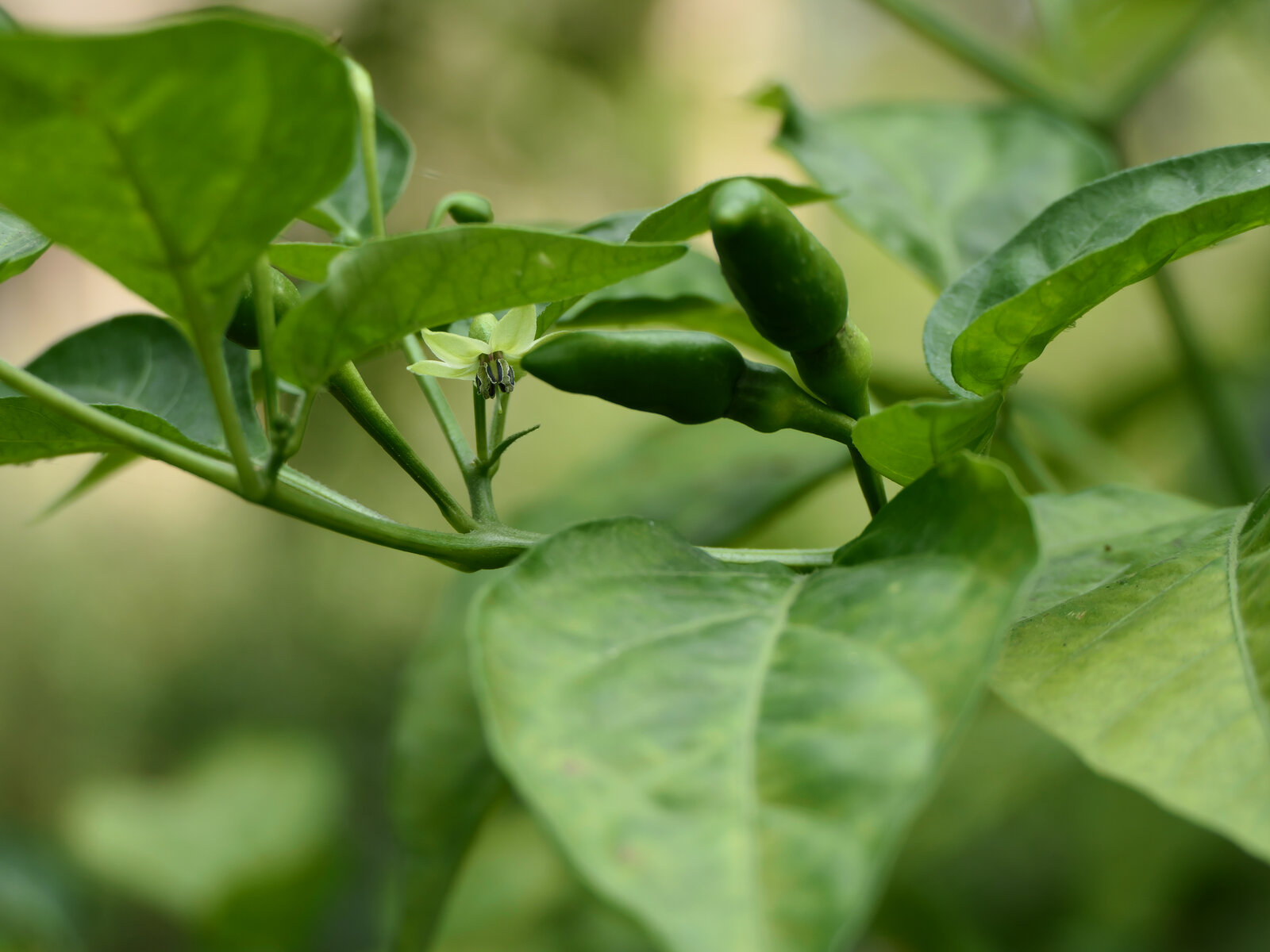
Tanzania's own chilli sector is built mainly around African bird's-eye chilli (Capsicum frutescens, known regionally as piri-piri/pili-pili), rather than the larger Capsicum annuum types grown for paprika elsewhere. Buyers should specify variety explicitly -- "bird's-eye" is a real, distinct commercial category from generic "dried chilli."
.jpg)
Product forms seen in Tanzanian export contract-farming arrangements are predominantly whole dried pods sold into specialty/food-industry and cosmetics-ingredient channels (bird's-eye chilli oleoresin is also used as a lipstick/cosmetics raw material, per trade press), rather than ground powder or flakes, which is more typical of the larger-fruited C. annuum trade.
Tanzania-specific: scale, smallholders & a named buyer relationship
FAOSTAT-derived figures put Tanzania's chilli and pepper (green) output at roughly 15.9 kilotonnes in 2024, essentially flat versus 2023 -- consistent with the national production figures already published on our own Tanzania chilli overview (15,855t 2024, 15,851t 2023). Production is smallholder-dominated; one trade source describes Tanzanian chilli production as organic "by default" at smallholder scale, though a separate, older sector report put formally certified organic chilli production at only roughly 24-28 tonnes/year (a 2020-published estimate referencing a 2010/2011 base figure of "over 7,000 tonnes" and claimed ~30%/year growth at that time) -- we flag that older figure as dated and narrower in scope (certified-organic volume specifically, not total national output) rather than conflating it with the current FAOSTAT total above.
A concrete, current example of contract-farming structure: Vitese Company Limited runs a bird's-eye chilli contract-farming programme with Tanzanian smallholders, supplying seed (reported at roughly 80g for TZS 150,000) and paying farmers approximately TZS 7,000/kg at farmgate, with the company citing demand from Japan, the UK, the US, India and South Africa and targeting roughly 30 tonnes/week of combined exports across markets. We report this as one documented company's named programme, not as evidence of an industry-wide price or volume.
Sources: FAOSTAT (via Helgi Library compilation); TDC/Enabel, "Organic Spices in Tanzania: Opportunities for Producers" (2020); HortiDaily, "Tanzania: How African birds-eye chili is growers' new 'green gold'", citing Vitese Company Limited.
Harvest timing -- an honest gap. We could not find a credible, chilli-specific harvest-calendar source for Tanzania; the closest we found was generic East African masika-season farming guidance (planting roughly February/March, harvest roughly July/August) that is not specific to chilli as a crop. Rather than publish an invented or generically-borrowed calendar, this page omits the harvest-seasonality widget shown on some other commodity pages on this network.
Buyer specification checklist
Worth putting in an RFQ or purchase order, whether or not every field applies to your order:
- Species/variety -- e.g. bird's-eye (Capsicum frutescens) vs other Capsicum types; don't assume "chilli" implies one variety.
- Pungency target -- SHU range, and whether measured by HPLC or taste panel.
- Form -- whole, crushed/flakes, or ground/powder.
- Moisture -- target/maximum; see the 11% figure above as a reference point, not an assumed default.
- Defect tolerance -- which table/tier applies (see comparison above).
- Aflatoxin/mycotoxin test certificate -- given the genuine food-safety stakes, request a current certificate of analysis rather than relying on origin reputation alone.
- Packaging -- food-grade material; ask what the supplier actually uses, since no single packaging weight/format is set in law for this product.
- Certification requirements -- organic or other, if applicable, and who issued it.
- Destination & Incoterm -- see our Incoterms for Commodity Buyers guide.
Sample & inspection guidance
- Appearance -- colour consistency, pod size/shape consistent with the variety ordered, visible mould or black-staining.
- Aroma -- should smell clean and characteristically pungent, not musty, rancid, or foreign-smelling.
- Breakage -- whole-pod proportion vs broken fruits/fragments against the tier ordered.
- Foreign/extraneous matter -- visible stalks, stems, stones, or other plant matter not part of the product.
- Packaging condition -- intact, dry, no signs of moisture ingress or pest activity.
A visual/aroma sample check is a screening step, not a substitute for laboratory testing -- pungency (SHU), moisture percentage and aflatoxin/mycotoxin levels all require lab equipment to confirm, not inspection by eye. Our general Quality Inspection & Pre-Shipment Verification guide covers the wider pre-shipment inspection process that applies across commodities, including chilli.
Full Tanzania chilli profile
Origins, production regions, processing in practice, and market/trade data with sources.
Read the full profile →Suppliers

Viridium Tanzania Limited
Producer/exporter of gourmet and extract-grade vanilla beans, powder and cuts, plus cardamom, clove, chili and cinnamon,…
Kimango Farms
Certified-organic (EU/BioSuisse) farm in Morogoro Region (Mbuyuni Farm, Mvomero district); chilli (Bird's Eye and Cayenne) is…
Ubora Landmark Limited
Organic black pepper exporter and bulk spice supplier sourcing from Tanga and Morogoro regions; also handles…
Layonhut Company Limited
Dar es Salaam-based trader listing African bird's-eye chili (dried, whole, non-GMO and conventional grades, Capsicum frutescens)…
Makaru Agro Limited
Tanga-based out-grower aggregator sourcing African Bird's Eye Chili from Tanzania, Uganda and Zambia for European and…
Vitesse Company Limited
Tanzanian agribusiness reported by independent press (The Citizen, 10 Jan 2022) to run contract-farming operations for…
Last reviewed 8 October 2026. Sources cited inline above; see also Data Sources and Methodology for how we handle disagreeing figures and unverifiable claims.