Tanzania Chilli: Origins, Production & Sourcing Guide
Overview
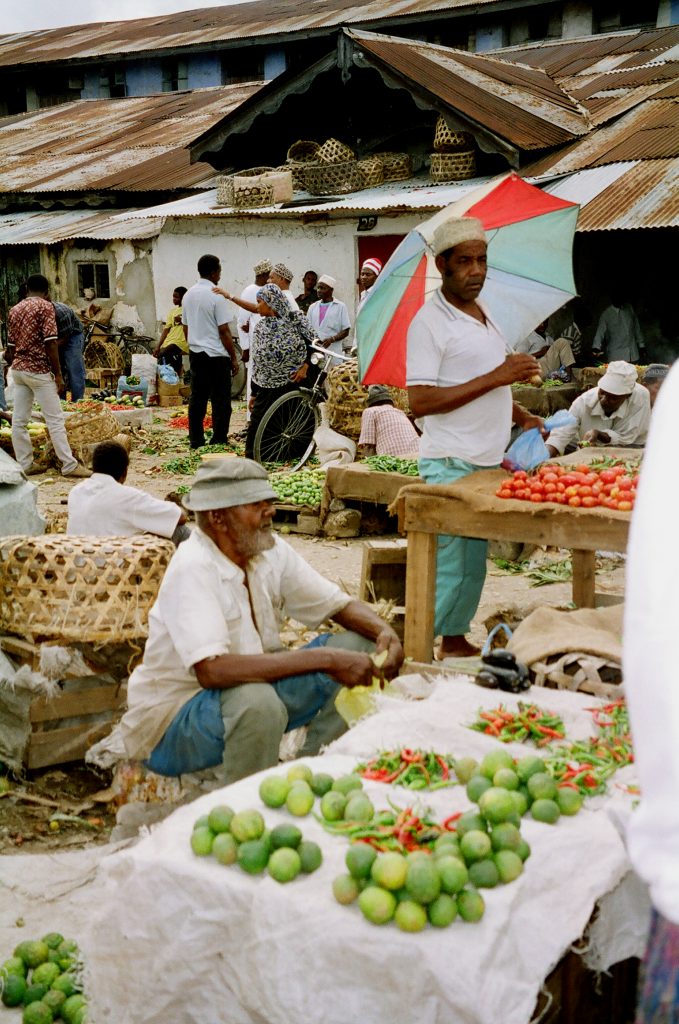
Tanzania is not a name that comes up in global chili-pepper trade the way Kenya, Zambia, or the major Asian and Latin American origins do — but African bird’s-eye chili (Capsicum frutescens, known locally as pili pili) is a real, actively-farmed smallholder crop here, and it has been promoted domestically since at least the early 2020s as a fast-turnaround “green gold” cash crop. Tanzanian government agricultural statistics track chili and pepper production nationally (FAOSTAT records 15.9 kilotonnes for Tanzania’s “chillies and peppers, green” category in 2024, though this FAO indicator bundles sweet/bell peppers together with hot chilies and is not chili-specific), and at least one Tanzanian contract-farming operator has reported exporting tens of tonnes per week. Independent East African trade researchers, however, describe the region’s exports as dominated by Kenya, which re-packages and re-exports chili gathered from both Tanzania and Uganda — a pattern that shows up in Tanzania’s own thin, declining customs export figures for dried chili.
Production & Growing Regions
The best-documented account of where Tanzanian bird’s-eye chili is grown comes from a January 2022 report in The Citizen (a mainstream Tanzanian daily), describing contract-farming operations run by Vitesse Company Limited. That reporting grades growing areas by harvest frequency: highest-yield areas capable of up to nine harvests a year were named as Dar es Salaam, Tanga, Coast (Pwani), Ruvuma, Lindi and Mtwara Regions; moderate-yield areas (seven to eight harvests) were named as Kilimanjaro and Arusha; and Njombe Region was described as lower-yield, at three to four harvests annually. The same report said the company had planted roughly 7,000 acres under contract by October 2021 against a stated 2020–2022 target of 10,000 acres, with an estimated yield of about 1 kilogram of dried chili per plant. Separately, Viridium Tanzania Limited — an established Morogoro-based spice exporter independently documented (via CARE Tanzania) as running a real smallholder network for cardamom, clove and vanilla — lists Bird’s Eye Chili as a distinct current product line on its own website, offered in both organic-certified and conventional grades, though that page does not specify which region(s) supply its chili. A March 2024 CGIAR-convened market-segmentation workshop held in Arusha, part of a wider Eastern Africa pepper value-chain study, found that “long chilies” (the category bird’s-eye/piri-piri chilies fall into) are more prevalent across Eastern Africa than in West Africa, without giving a Tanzania-specific breakdown.
Farmer Economics & Contract Farming
The Citizen’s 2022 reporting is also the main documented source on what growers are paid: Vitesse was reported to pay an average of about TZS 7,000 per kilogram, with the company’s Northern and Central Zone Manager (Richard Isingo) quoted describing a package of agricultural support — from nursery preparation through harvesting and storage — extended to contracted farmers, alongside a seed-procurement cost of roughly TZS 150,000 for 80 grams of seed. Estimated farmer earnings of up to TZS 10 million per season were cited in the same reporting. We were not able to independently corroborate any of these specific figures against a company-controlled source: Vitesse’s own domain (vitessetz.com), which search results describe as its official site, did not resolve when checked directly on 28 September 2026, so this entire picture rests on one newspaper’s account from more than three years ago and should be read as historical, not current, pricing.
Grading & End Uses
The Citizen’s reporting describes a four-tier grading system (A–D) applied after harvest: Grade A and B chili is exported to Asia, Europe and the Americas for food and spice use, while Grade C and D — lower-quality material — is described as going to South Africa for use in manufacturing, including in oleoresin-capsicum products such as irritant/tear-gas formulations, alongside stated use in cosmetics (lipstick pigment) and traditional/human and plant medicine. We present this grading structure as reported, not independently re-verified against a grading standard or industry body, since no Tanzania-specific published chili grading standard could be located in this review.
Market Context & Trade
Tanzania’s own recorded exports of dried chili pepper are small and falling: trade-intelligence aggregator Tridge shows Tanzania exporting 407,317 kg of dried chili pepper worth $880,924 in 2022, dropping to 135,277 kg worth $276,927 in 2023 — an export unit value of roughly $2.16/kg in 2022 and $2.05/kg in 2023. Tridge tracked only one “verified supplier” for the category at the time of our review. These figures sit uneasily next to the ~30 tonnes/week (over 1,500 tonnes/year) that a single company (Vitesse) reportedly had under export contract in 2022 — a gap that likely reflects some combination of chili being re-exported via Kenya rather than declared as a direct Tanzanian export, informal/undeclared trade, and the general thinness and volatility that Tanzanian minor-spice trade data shows elsewhere on this network (see our cardamom and clove coverage). We are not able to reconcile these two pictures with the sources available and are flagging the discrepancy rather than picking one number to feature.
Price Data: An Honest Gap
As with cardamom, no Tanzanian government agency, industry association or international body publishes a farm-gate, auction or wholesale price series specific to chili. The Ministry of Agriculture’s Weekly Market Bulletin does not carry a chili line; the National Bureau of Statistics has no chili-specific release. The only price-adjacent figures we could locate are (1) the single, dated, single-buyer TZS 7,000/kg farm-gate figure from The Citizen’s 2022 reporting, and (2) the Tridge customs-derived export unit values above (~$2.05–2.16/kg), which are an average across all buyers and grades in a given year, not a quoted market price. Neither is a defensible current price series.
We will not manufacture a “Tanzania chili price” to fill this gap. If a defensible price series becomes available, we will add it and cite it.
Current Market
Tanzania
| Market | Type | Grade | Price | Observed | Source |
|---|---|---|---|---|---|
| Vitesse Company Ltd farmgate price (bird's-eye chili, contract farming) | Farm gate | bird's-eye | TZS 7,000.00/kg | 10 Jan 2022 Historical | HortiDaily |
Production & Trade
| Category | Value | Period | Geography | Source |
|---|---|---|---|---|
| Area Harvested | 603 ha | 2024 | National | FAOSTAT (Food and Agriculture Organization of the UN) |
| Area Harvested | 605 ha | 2023 | National | FAOSTAT (Food and Agriculture Organization of the UN) |
| Area Harvested | 603 ha | 2022 | National | FAOSTAT (Food and Agriculture Organization of the UN) |
| Area Harvested | 600 ha | 2021 | National | FAOSTAT (Food and Agriculture Organization of the UN) |
| Area Harvested | 612 ha | 2020 | National | FAOSTAT (Food and Agriculture Organization of the UN) |
| Area Harvested | 599 ha | 2019 | National | FAOSTAT (Food and Agriculture Organization of the UN) |
| Area Harvested | 588 ha | 2018 | National | FAOSTAT (Food and Agriculture Organization of the UN) |
| Area Harvested | 573 ha | 2017 | National | FAOSTAT (Food and Agriculture Organization of the UN) |
Figures from different sources sometimes disagree (e.g. sector-body press statements vs. customs trade data) — where that happens we show both, tagged by source, rather than silently picking one. See Data Sources.
Suppliers
6 publicly-sourced suppliers for this commodity — producers, processors, exporters and cooperatives.

Viridium Tanzania Limited
Producer/exporter of gourmet and extract-grade vanilla beans, powder and cuts, plus cardamom, clove, chili and cinnamon,…
Kimango Farms
Certified-organic (EU/BioSuisse) farm in Morogoro Region (Mbuyuni Farm, Mvomero district); chilli (Bird's Eye and Cayenne) is…
Ubora Landmark Limited
Organic black pepper exporter and bulk spice supplier sourcing from Tanga and Morogoro regions; also handles…
Layonhut Company Limited
Dar es Salaam-based trader listing African bird's-eye chili (dried, whole, non-GMO and conventional grades, Capsicum frutescens)…
Makaru Agro Limited
Tanga-based out-grower aggregator sourcing African Bird's Eye Chili from Tanzania, Uganda and Zambia for European and…
Vitesse Company Limited
Tanzanian agribusiness reported by independent press (The Citizen, 10 Jan 2022) to run contract-farming operations for…
Tanzania Commodities Marketplace — Buy & Sell Chilli
Verified seller companies, buying requirements and direct quotations for Chilli — powered by the network's shared B2B marketplace.
Available Offers
No active Chilli offers are currently published.
Are you a Tanzanian Chilli supplier? List your product.
Buyer Requirements
No open Chilli buying requirements right now.
Looking to buy? Post a buying requirement.
- The Citizen (Tanzania) — How African birds-eye chili is farmers' new 'green gold' — https://www.thecitizen.co.tz/tanzania/business/how-african-birds-eye-chili-is-farmers-new-green-gold--3675878 — 2026-09-28
- Viridium Tanzania Limited — Bird's Eye Chili product page — https://viridium.co.tz/birds-eye-chili/ — 2026-09-28
- CGIAR — Pepper market segment validation workshops in Benin and Tanzania — https://www.cgiar.org/news-events/news/pepper-market-segment-validation-workshops-in-benin-and-tanzania — 2026-09-28
- Helgi Library (FAOSTAT compiler) — Production of chilli and pepper (green), Tanzania — https://www.helgilibrary.com/indicators/production-of-chilli-and-pepper-green/tanzania — 2026-09-28
- Tridge — Tanzania dried chili pepper trade data (HS 090421) — https://www.tridge.com/intelligences/other-chili-pepper/TZ/production — 2026-09-28